
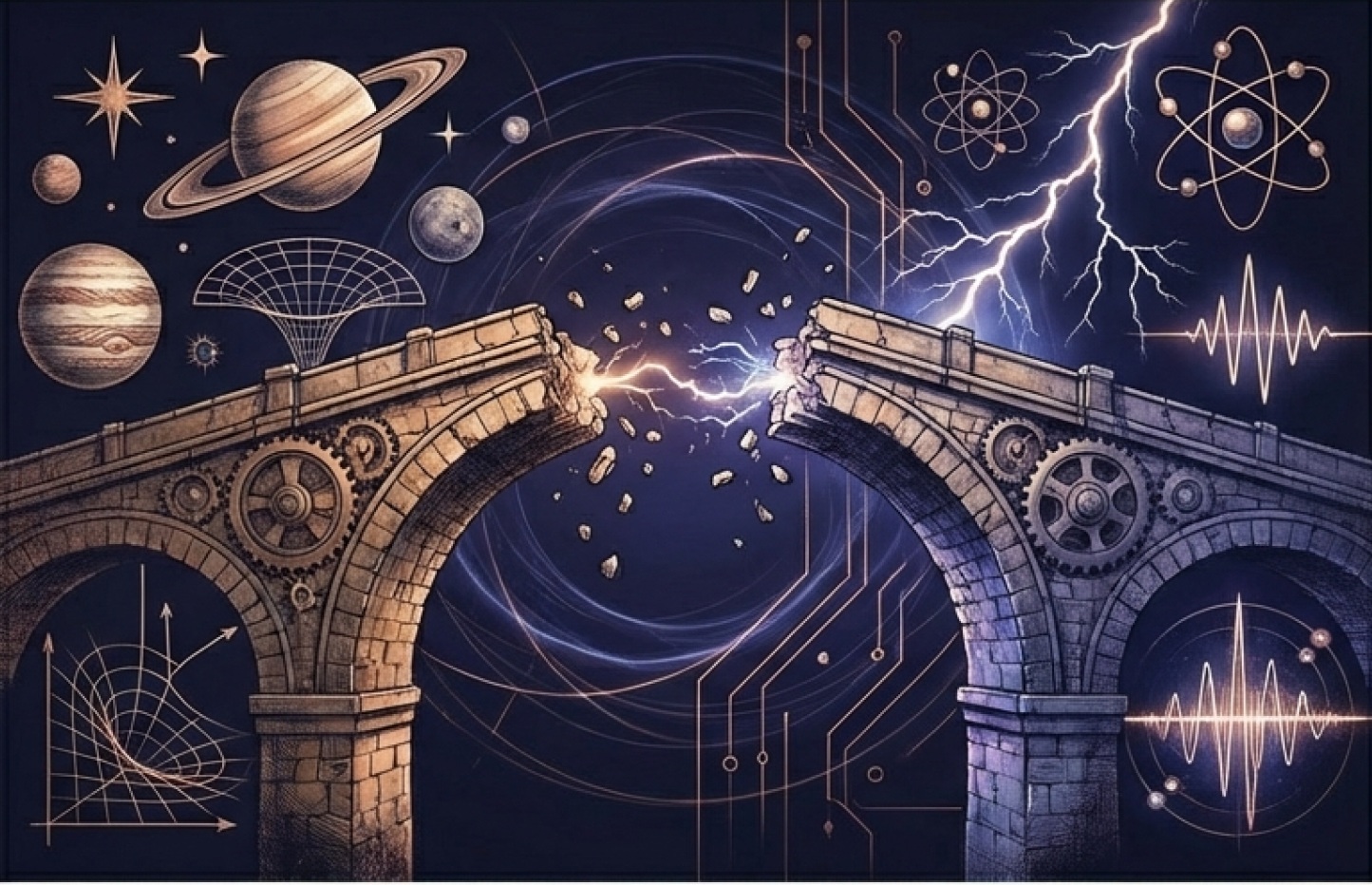
Modern Physics: Reality divided into Quantum Mechanics and General Relativity
SerendipiaScienceAbout This Course
Quantum mechanics oversees matter at its tiniest scale: fundamental particles and their interactions, which are predominantly of attractive and repulsive nature, i.e, charges. General relativity oversees matter at the large and cosmological scale, which is predominantly guided by gravity, i.e., mass. These two scales of reality are divorced in modern physics, with huge implications for humanity.
The space between scales is the connecting entity, unacknowledged in modern physics. The role of the quantum field, composing space all around us and inside matter, is the missing piece of the puzzle, piece that modern cosmology coined dark matter and dark energy, and represents 96% of the universe. In this course we explore these notions, framing them in the context of the forthcoming Unified Physics course.Requirements
This course is for the general public and scientists who wish to understand the foundations of holographic physics, which explains the origin of mass, forces, and fields from quantum vacuum fluctuations, without using tuning parameters. It is a first-principles theory.
Course Staff
Inés Urdaneta, PhD physicist specializing in the light-matter interaction at the atomic and molecular scale.
Frequently Asked Questions
What web browser should I use?
The Open edX platform works best with current versions of Chrome, Edge, Firefox, or Safari.